

A monthly repayment is often the first number we notice when looking at borrowing. It feels familiar: another amount to fit around rent, food and the rest of life. But one payment does not explain the whole commitment. Understanding borrowing in plain English means connecting the amount received, the time involved and the total to be repaid. You do not need to become a finance specialist. You do need a clear enough explanation to decide whether you want to take the next step, ask another question or stop.
Begin with the amount and the purpose
Before comparing offers, write down what the borrowing would be for and the amount you are considering. Keep this separate from any larger amount a website might display. A useful question is whether the commitment addresses a particular need or simply moves a current shortfall into another month. Take time to think about the answer away from the application screen. If essential bills are already difficult, free debt guidance may be a more useful first conversation than beginning another credit application.
Know which numbers you are comparing
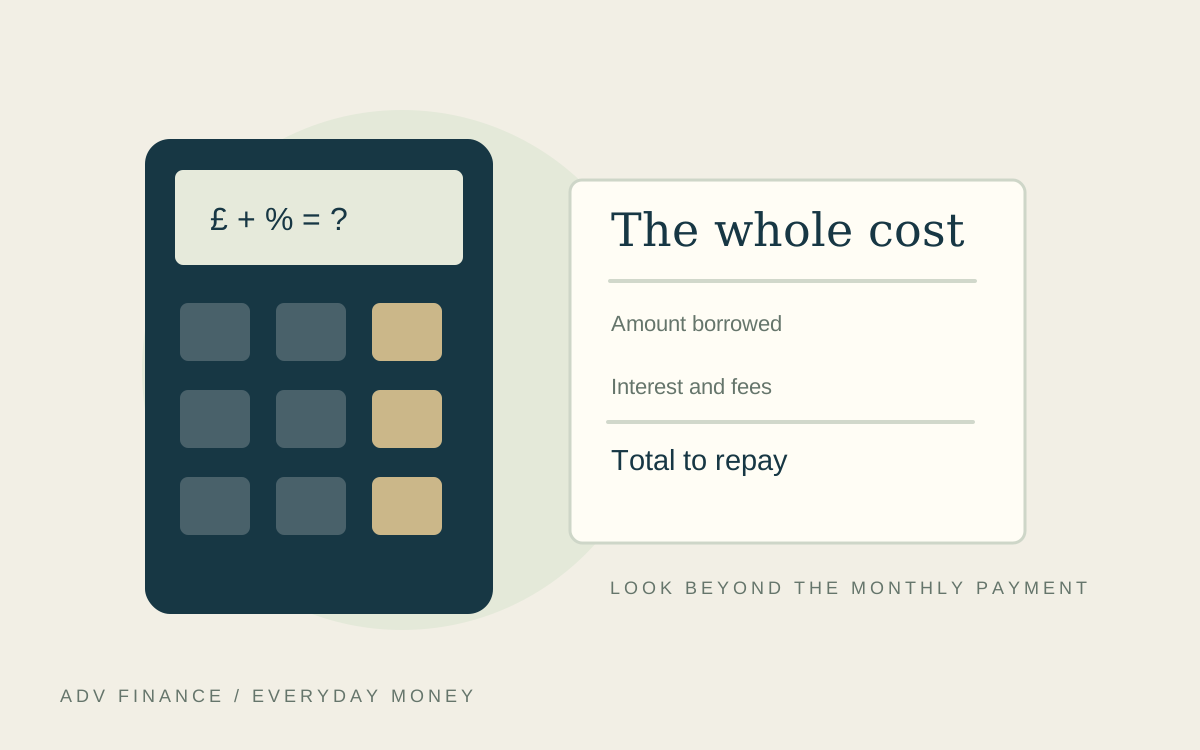
The amount borrowed is the sum the agreement says you are borrowing. The term is the period over which it is due to be repaid. The repayment is what you would pay on the agreed dates, while the total repayable shows the overall amount due under the stated terms. Put these figures beside one another. Comparing a monthly amount without also comparing the term can hide an important difference. Ask for clarification whenever the figures shown in an offer do not match your understanding.
Understand interest and APR in context
Interest is a cost of borrowing. APR, the annual percentage rate, is a broader annual measure that includes interest and certain charges. It is useful information, but it does not replace reading the actual terms. The advertised rate may differ from the rate offered to you, and a lender makes its own assessment. Look at the personalised offer, the repayment schedule and the total repayable together. A familiar percentage is not enough to tell you whether an agreement fits your circumstances or whether you understand every charge.
Read the dates as carefully as the amounts
A repayment schedule belongs in a real calendar. Find the first payment date, how frequently payments fall due and the final scheduled payment. Compare those dates with when your income usually arrives. For example, a payment due just before payday might feel different from the same amount due just afterwards. That does not change the obligation in the agreement. It is a reason to ask questions before accepting it. Keep a note of any explanation rather than relying on what you think a screen said earlier.
Think beyond a particularly good month
Try looking at an ordinary month and then a less comfortable one. Include housing, food, transport, household bills and existing commitments. Consider irregular costs you already know about, such as an annual renewal. The question is not whether you can imagine making the first payment. It is whether you understand the continuing commitment and the room left in your budget. If the calculation depends on income you are unsure about receiving, make that uncertainty visible to yourself instead of quietly treating it as guaranteed.
Separate unsecured borrowing from secured borrowing
An unsecured personal loan is not secured against a particular asset in the way a secured loan is. That does not mean missed payments are without consequences. Fees, credit-record effects and other action can still be relevant, depending on the agreement and circumstances. Read the section explaining what happens if a payment is missed and who you should contact if difficulties arise. ADV Finance introduces customers for unsecured loan agreements; this article is not an invitation to treat one form of borrowing as suitable for everyone.
Be clear about the broker and the lender
ADV Finance LTD is a licensed credit broker, not a lender. We introduce borrowers and lenders for the purpose of entering into unsecured loan agreements. A lender decides whether to offer credit and on what terms. An introduction does not guarantee an offer. There is no charge to you for using our service, but we may receive a commission or fee for providing your information to our panel of lenders and brokers. Knowing who performs each role helps you direct questions to the right business.
Ask about the parts that are less visible
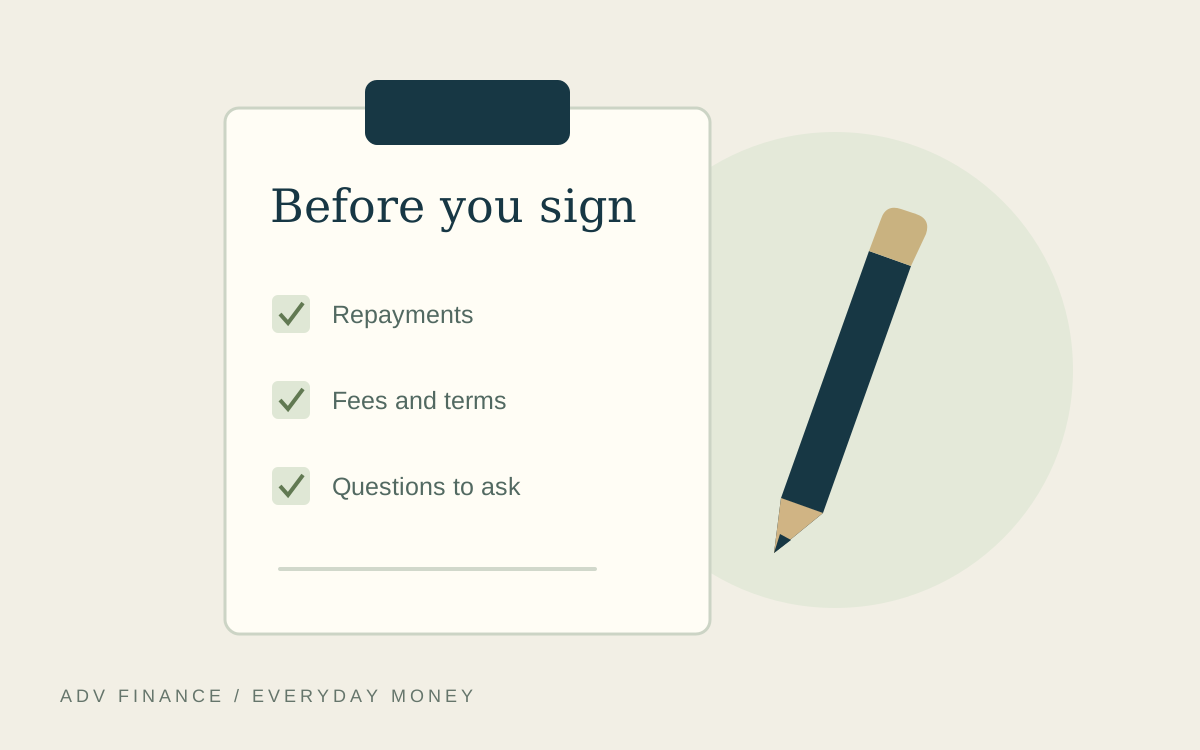
Before deciding, find the sections about charges, early repayment and missed payments. Ask the provider to explain unfamiliar wording using a simple example. Save the offer and any written answer so you can check them together. You can also use our loan calculator to explore an illustration, while remembering that a calculator result is not a lender's offer. The useful outcome is clarity: you should be able to describe the commitment in your own words, including what remains uncertain, before deciding whether to proceed.
Keep a straightforward record
A short comparison sheet can contain the provider name, amount borrowed, term, repayment dates, total repayable and your outstanding questions. Use information from the actual offer and date your notes. If you are comparing several products, avoid mixing a figure from one with terms from another. MoneyHelper's personal loans guide offers further background. For wider concerns about bills or debts, the independent support section below provides routes to help without requiring you to make a borrowing decision first.